How Long To Learn French? Beginner, Intermediate, And Advanced Timeframes Explained
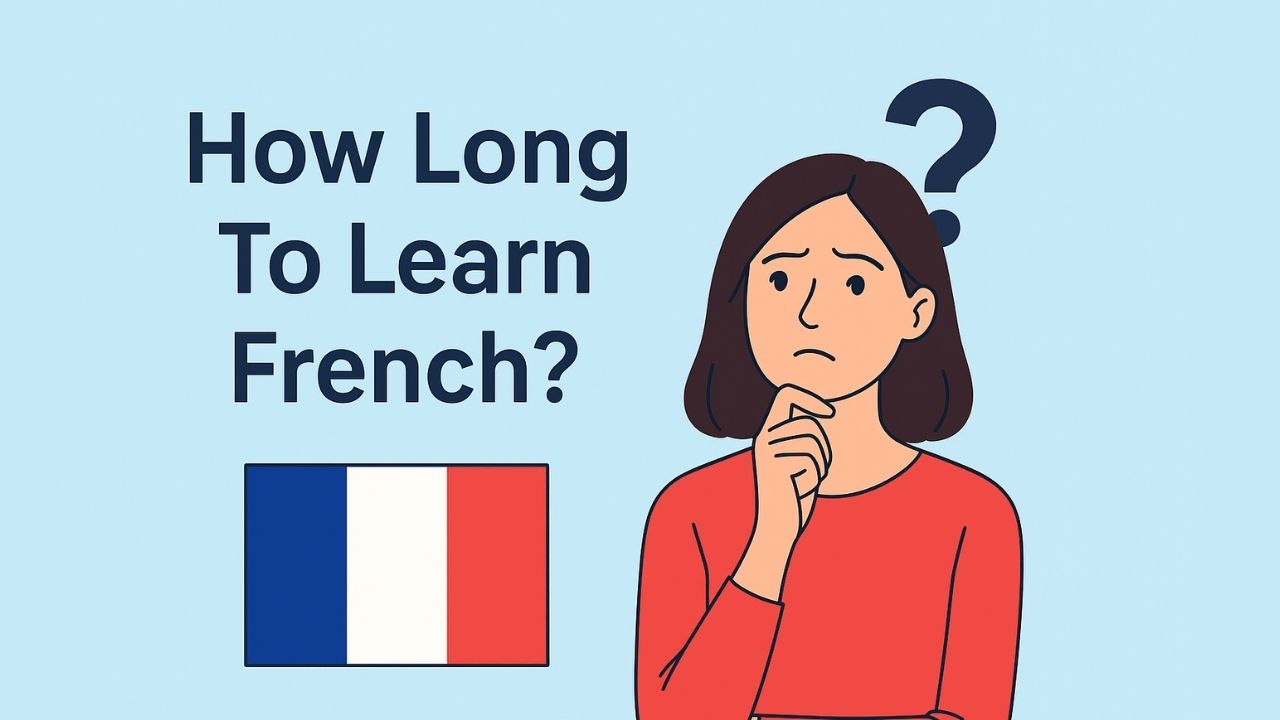
If you are wondering How Long To Learn French, the real answer depends on how you study, how often you practice, and the environment you learn in. Some people rely on apps like Duolingo, Babbel, or Rosetta Stone, others immerse themselves in France, while many learn from English or Spanish and progress at different speeds. In this guide, you’ll discover beginner, intermediate, and advanced timeframes, how long it takes to reach B2, what learners report online, and what truly speeds up your progress. Everything here gives you a realistic path from A1 to C2.
Let’s begin with a clear understanding of the French learning levels so you know exactly what each stage means.
Understanding The Levels Of French Learning
The CEFR scale divides French learning into six levels: A1, A2, B1, B2, C1, and C2. These levels help you measure your speaking, listening, reading, and writing progress. When you understand what each level represents, your entire learning journey becomes easier to plan.
A1: Beginner Level Skills
A1 allows you to introduce yourself, understand familiar words, and manage predictable situations. You learn basic verbs, simple vocabulary, and how to build short sentences.
A2: Elementary Level Skills
A2 gives you enough French to handle everyday conversations. You talk about daily life, preferences, routine, work, and simple plans. You also understand slow, clear speech.
B1: Intermediate Level Skills
B1 is where you gain real confidence. You discuss familiar topics, describe events, explain opinions, and understand more complex conversations. You start thinking more naturally in French.
B2: Upper-Intermediate Level Skills
B2 is often considered fluency. You understand fast speech when the topic is familiar, participate in long conversations, debate, and express complex ideas clearly. This level is enough for work or studies in a French-speaking environment.
C1: Advanced Level Skills
C1 lets you handle detailed discussions, read complex texts, switch tones naturally, and express subtle ideas confidently.
C2: Near-Native Level Skills
C2 gives you full mastery. You understand everything with ease, adapt your language instantly, and express extremely complex thoughts smoothly.
Now that you understand what the levels represent, it’s time to explore how long each one takes.
Learning French Quickly: Pro Tips
Here are some tips I recommend to my students that word very well:
Speak From Day One
Even simple sentences improve confidence and pronunciation.
Use Spaced Repetition Systems
Apps like Anki help memorize vocabulary efficiently.
Immerse Yourself Digitally
Watch French shows, listen to podcasts, and read French articles.
Record Yourself
Hearing your own speech highlights pronunciation errors.
Practice Writing Daily
Journaling in French reinforces grammar and vocabulary.
Engage With Native Speakers
Conversation partners or online tutors accelerate fluency.
Set Clear Milestones
Track progress for each CEFR level to stay motivated.
So,
How Long To Learn French For Each Level
French levels follow the CEFR scale (A1–C2), which helps learners measure their exact progress. Here’s a detailed breakdown of how long each stage takes under normal circumstances.
A1: Beginner Level Timeframe
A1 is the absolute beginner stage, where you learn to introduce yourself, talk about basic daily activities, understand simple words, and make short sentences. You also learn pronunciation foundations, basic verbs like être (to be) and avoir (to have), and essential vocabulary.
Timeframe To Reach A1:
60–100 hours of study
1–2 months with consistent daily learning
What You’ll Be Able To Do At A1:
- Say your name, age, nationality, and hobbies
- Talk about your family, school, or job
- Use simple present tense sentences
- Understand basic phrases when spoken slowly
- Order food, ask for prices, and navigate basic travel situations
Why Some Learners Take Longer:
- Inconsistent study habits
- Difficulty with pronunciation
- Limited listening exposure
Still, most motivated learners reach A1 fairly quickly.
A2: Elementary Level Timeframe
A2 builds on A1 by introducing more complex sentences, common verbs, question forms, past tenses, and everyday vocabulary like shopping, traveling, routines, and social interactions.
Timeframe To Reach A2:
120–180 total study hours
3–4 months with consistent daily practice
What You’ll Be Able To Do At A2:
- Describe your routine
- Talk about your past using passé composé
- Explain preferences and opinions
- Understand simple stories and audio
- Handle basic social interactions
At this level, you begin to feel more confident, but you still rely on simple familiar topics. Before we move to B1, it helps to understand that reaching the intermediate stage requires more consistency and exposure than the beginner stage.
B1: Intermediate Level Timeframe
B1 is where most learners start feeling like they can “use” French in real life. You develop conversational skills, master multiple tenses, and understand a wider range of vocabulary.
Timeframe To Reach B1:
350–400 hours total
6–9 months with consistent daily study
What You’ll Be Able To Do At B1:
- Hold conversations about work, school, hobbies, or travel
- Describe events and express opinions
- Understand audio with clear speech
- Write simple paragraphs
Many learners remain at B1 because it is comfortable and functional, but not fluent yet.
B2: Upper-Intermediate Level Timeframe
B2 is the most important milestone in French learning because most universities, jobs, and professional certifications require at least B2.
Timeframe To Reach B2:
- 550–750 total hours of study
- 10–18 months with regular learning
Why B2 Is Harder Than B1:
- Complex grammar such as the subjunctive and conditional
- Longer and faster listening materials
- Broader vocabulary
- Need for structured expressive skills
What You’ll Be Able To Do At B2:
- Hold long, complex conversations naturally
- Express ideas clearly and spontaneously
- Debate opinions
- Follow news, podcasts, and films with fewer subtitles
- Read articles on unfamiliar topics
B2 is the level where you stop translating in your mind. Before going into C1 and C2, let’s first explore the realistic timelines for advanced levels and why they require more immersion and practice compared to intermediate levels.
How Long To Learn French To Reach Advanced Levels
Going from B2 to C1 and C2 demands significantly more effort. These levels require high comprehension, sophisticated grammar usage, flexible vocabulary, and strong writing skills.
C1: Advanced Level Timeframe
C1 learners can handle almost all professional and academic tasks in French. They understand fast speech, complex content, and technical vocabulary.
Timeframe To Reach C1:
800–1,200 hours total
1.5–2.5 years of structured study
What You Can Do At C1:
- Understand long and demanding audio
- Write essays, reports, and arguments
- Communicate spontaneously without hesitation
- Speak fluently on a wide range of topics
Reaching C1 requires constant immersion, strong listening habits, and regular reading.
C2: Mastery Level Timeframe
C2 represents near-native proficiency. Few learners go past C1 because C2 demands deep exposure and long-term refinement.
Timeframe For C2:
1,500+ hours total
3+ years of consistent learning or immersion
What You Can Do At C2:
- Understand almost everything you hear or read
- Express complex ideas effortlessly
- Use French precisely in any situation
While C2 is unnecessary for most people, it is achievable with dedication. Before we explore learning methods like Duolingo, Rosetta Stone, and immersion, let’s first consider the impact of your native language.
How Long To Learn French From English
English speakers typically need 600–750 hours to reach B2 because French and English share Latin roots but differ in grammar, structure, and pronunciation.
Factors That Affect English Speakers’ Timelines
Pronunciation Challenges
French nasal vowels and silent letters take time to master.
Verb Conjugations
French has many conjugation patterns that feel complex at first.
Gendered Nouns
English speakers must learn masculine and feminine agreement.
Listening Speed
French sounds fast because of connected speech.
Typical Timeline For English Speakers
| Level | Hours Needed | Timeframe |
|---|---|---|
| A1 | 60–100 | 1–2 months |
| A2 | 120–180 | 3–4 months |
| B1 | 350–400 | 6–9 months |
| B2 | 550–750 | 10–18 months |
Before we compare this with Spanish speakers, it’s helpful to understand that language similarities can greatly speed up your progress.
How Long To Learn French If You Speak Spanish
Spanish speakers generally learn French faster because both languages are Romance languages with similar grammar and vocabulary.
Why Spanish Speakers Learn Faster
Similar Vocabulary
Many French and Spanish words share roots.
Gendered Grammar
Spanish speakers already understand grammatical gender.
Verb Conjugation Familiarity
French conjugations feel more natural to them.
Spanish Speakers’ Typical Timeline
| Level | Hours Needed | Timeframe |
|---|---|---|
| A1 | 40–60 | 1 month |
| A2 | 90–140 | 2–3 months |
| B1 | 250–300 | 5–7 months |
| B2 | 450–600 | 9–14 months |
Before moving to learning platforms, let’s continue with app-based learning timelines.
How Long To Learn French On Duolingo
Duolingo helps with vocabulary, grammar basics, and consistency, but it is not enough for fluency.
What Duolingo Helps You Achieve
Duolingo effectively supports learners from A1 to A2 and can assist with parts of B1 when combined with other resources.
Timeframes Using Duolingo Alone
A1 in 2–3 months
A2 in 4–6 months
B1 possible only with extra speaking and listening practice
Why Duolingo Learners Plateau
- Limited conversation practice
- Weak listening exposure
- Vocabulary memorization without deep grammar
Learning French on Duolingo really depends on your goals and consistency. For beginners practicing 15–30 minutes daily, reaching a conversational level might take around 6–12 months. Intermediate fluency could take 1–2 years, while advanced mastery might take several years. The key is regular practice, using Duolingo alongside listening, speaking, and real-life interactions.
Before moving to Rosetta Stone, it helps to know that different language apps produce different learning results.
How Long To Learn French With Rosetta Stone
Rosetta Stone uses immersion-style teaching with images, recall, and pattern recognition.
Strengths Of Rosetta Stone
- Great for pronunciation
- Useful for instinctive understanding
- Effective for early levels
Limitations
- Weak on complex grammar
- Limited writing practice
- Slower reading development
Rosetta Stone Timeframes
A1 in 1–2 months
A2 in 3–5 months
B1 in 6–10 months with extra resources
Learning French with Rosetta Stone depends on your dedication and daily practice. If you study 30 minutes a day, you might reach a basic conversational level in about 6–12 months. Achieving intermediate fluency could take 1–2 years, while advanced proficiency may take several years. Consistency, immersion, and practicing speaking alongside the lessons make a big difference.
Before we move to immersion learning in France, it’s important to understand how real-life exposure changes your learning speed.
How Long To Learn French In France
Immersion accelerates learning because you interact with French all day.
Immersion Timeframes In France
| Goal | Time Needed |
|---|---|
| A2 | 1–2 months |
| B1 | 3–5 months |
| B2 | 6–10 months |
| C1 | 1–2 years |
Why Immersion Works So Well
- You hear natural speech daily
- You learn practical vocabulary
- You stop relying on translations
- You practice speaking constantly
Learning French in France can be much faster because of full immersion. With daily classes and practicing in real-life situations, beginners might reach a conversational level in 3–6 months. Intermediate fluency can take about 6–12 months, while advanced mastery usually requires 1–2 years. The more you speak, listen, and interact, the quicker you’ll improve.
Before exploring what real people say online, let’s look at community opinions about French learning timelines.
How Long Does It Take To Learn French According To Reddit
Reddit users share real experiences about learning French, which helps form realistic expectations.
Reddit Users’ Common Timelines
A1 in 1–2 months
A2 in 3–5 months
B1 in 6–12 months
B2 in 1–2 years
C1 in 2–3 years
Reddit learners often mention that listening is the hardest skill, reading is the easiest, speaking improves fastest with immersion, and apps alone cannot take you to fluency.
Factors That Influence How Long To Learn French
Understanding the variables that speed up or slow down progress helps set realistic goals. Major factors include:
1. Native Language
English speakers often need more time than Spanish speakers due to grammar differences, vocabulary overlap, and pronunciation challenges. Romance language speakers progress faster because of shared roots.
2. Study Consistency
Daily, short, focused sessions are more effective than occasional long sessions. Consistency helps transfer knowledge from short-term memory to long-term memory.
3. Learning Environment
Being in France, taking classes, or regularly conversing with native speakers accelerates progress. Online learners with no speaking practice progress slower.
4. Motivation And Goals
Clear goals like passing exams, traveling, or working in French enhance dedication and speed. Motivation directly affects practice frequency and persistence.
5. Study Methods
Using multiple approaches—apps, textbooks, tutors, podcasts, and media exposure—produces faster results than relying solely on one method.
Daily Study Plans For Learning French Efficiently
A structured daily plan is essential to maximize your learning speed and retention. Consistency outweighs long, irregular study sessions. Depending on your target level, you can adjust the intensity and type of exercises. Here’s how daily study might look for different stages.
Beginner Daily Study Plan (A1–A2)
Start with:
1. Vocabulary Practice
15–20 minutes reviewing essential words and phrases using flashcards, apps, or spaced repetition.
2. Grammar Introduction
20 minutes focusing on present tense verbs, articles, basic sentence structures, and gender rules.
3. Listening Practice
10–15 minutes of simple audio materials like beginner podcasts, Duolingo audio exercises, or children’s shows.
4. Speaking Practice
5–10 minutes reading aloud or repeating sentences to train pronunciation.
5. Writing Practice
5 minutes forming short sentences about your day or personal information.
With this routine, you can reach A1 in 1–2 months and A2 in 3–4 months.
Intermediate Daily Study Plan (B1–B2)
1. Vocabulary Expansion
20–30 minutes focusing on thematic vocabulary like travel, work, hobbies, or social topics.
2. Grammar Deep Dive
30 minutes studying past tenses, conditional forms, reflexive verbs, and pronouns.
3. Listening Comprehension
20–30 minutes listening to intermediate podcasts, radio shows, or TV series with French subtitles.
4. Speaking Practice
15–20 minutes of conversation with language partners, tutors, or recording yourself speaking about daily events.
5. Writing Practice
10–15 minutes writing short essays, personal opinions, or summarizing audio content.
Consistency with this routine can get you to B1 in 6–9 months and B2 in 10–18 months.
Advanced Daily Study Plan (C1–C2)
1. Specialized Vocabulary
30–40 minutes of thematic vocabulary, idiomatic expressions, and professional jargon.
2. Grammar Mastery
20–30 minutes refining complex structures, including subjunctive, advanced pronouns, and nuances in tense usage.
3. Advanced Listening
30–45 minutes of podcasts, news, debates, and films at native speed without subtitles.
4. Speaking Practice
20–30 minutes daily with fluent speakers, discussing abstract topics, current events, and cultural nuances.
5. Writing Practice
20–30 minutes writing essays, reports, and critical reviews.
This level of intensity, combined with immersion, can lead to C1 in 1.5–2.5 years and C2 in 3+ years.
Before exploring more methods, it’s essential to consider the impact of immersion versus self-study, as they dramatically affect timelines.
The Role Of Immersion In Accelerating French Learning
Immersion remains the fastest method for reaching fluency. Being surrounded by French speakers allows you to hear, think, and respond in real-time without translating in your head. Even short-term immersion programs significantly accelerate progress.
Full Immersion Tips
- Speak French as much as possible, even with mistakes.
- Listen to French media daily, including news, podcasts, and TV shows.
- Practice writing emails, texts, and diary entries in French.
- Participate in local activities to use French contextually.
- Focus on listening comprehension before perfection in speaking.
Learners living in France or attending language programs often reach B2 within a year, compared to 1.5–2 years for self-study learners.
Combining Apps And Real-Life Practice
Apps like Duolingo and Rosetta Stone are helpful, especially for vocabulary and basic grammar, but they must be paired with speaking and listening practice for faster results. The most effective approach combines:
- Apps for vocabulary and grammar drills.
- Tutors or conversation partners for speaking.
- Media exposure for listening comprehension.
- Writing exercises for grammar and vocabulary retention.
This blended approach ensures learners don’t plateau after beginner levels and progress steadily toward B2 and C1.
Final Thought On How Long To Learn French
On average, reaching high-level French takes 600 to 750 hours, but everyone’s timeline looks a little different. With a steady study routine, everyday conversation usually becomes manageable in 6–9 months. If you only need simple phrases for travel, 3–4 months is doable with light weekly practice. Your past experience with other languages, how you study, and the resources you rely on can speed things up or slow things down.
FAQs
How Long Does It Take To Learn French For Beginners?
For beginners, learning French usually takes 1–2 months to reach A1 level if you study consistently every day. You’ll focus on basic vocabulary, simple sentences, and pronunciation. Progress depends on practice time, study methods, and exposure to the language through listening or speaking exercises.
How Long To Learn French To Reach B2 Level?
Reaching B2 generally requires 550–750 hours of study for English speakers, which may take 10–18 months with regular practice. At this level, you can hold complex conversations, understand news, write essays, and communicate naturally in most real-life situations without relying on translations.
How Long To Learn French On Duolingo?
Duolingo helps beginners reach A1–A2 levels effectively. On average, you can reach A1 in 2–3 months and A2 in 4–6 months. Reaching B1 or B2 requires extra resources, such as speaking practice, listening exercises, and immersion, because Duolingo alone doesn’t fully develop listening and speaking skills.
How Long To Learn French With Rosetta Stone?
Rosetta Stone is great for early levels due to its immersive approach. Beginners can reach A1 in 1–2 months and A2 in 3–5 months. To achieve B1, you’ll need additional practice in grammar, writing, and speaking. Advanced levels like B2 and C1 require supplementary tools and real-life exposure.
How Long To Learn French If You Speak Spanish?
Spanish speakers usually progress faster due to shared grammar and vocabulary. A1 can be achieved in one month, A2 in 2–3 months, B1 in 5–7 months, and B2 in 9–14 months. Your study consistency and practice with listening and speaking will determine the exact pace.
How Long To Learn French From English?
English speakers typically need 600–750 hours to reach B2, which translates to 10–18 months of consistent study. Factors such as pronunciation, gendered nouns, and verb conjugations make learning slightly slower compared to Romance language speakers, but steady practice and immersion can accelerate progress.
How Long Does It Take To Learn French In France?
Immersion in France accelerates learning because you constantly hear, speak, and think in French. A2 can be reached in 1–2 months, B1 in 3–5 months, B2 in 6–10 months, and C1 in 1–2 years. Daily real-life interactions and cultural exposure make learning faster and more practical.
How Long Does It Take To Learn French According To Reddit?
Reddit learners report varied timelines: A1 in 1–2 months, A2 in 3–5 months, B1 in 6–12 months, B2 in 1–2 years, and C1 in 2–3 years. They emphasize that speaking is the hardest skill, listening improves slowly, reading is easiest, and apps alone cannot take you to full fluency.
How Long To Learn French Grammar?
Basic grammar can be learned in 2–3 months with daily practice. Intermediate grammar, including past tenses and pronouns, takes 6–12 months. Advanced grammar, like subjunctive and conditional forms, may require 1–2 years, depending on study intensity and consistent application in speaking and writing.
How Long To Learn French Vocabulary?
Basic vocabulary takes 1–2 months for beginners. Intermediate vocabulary requires 6–9 months to cover around 2,000–3,000 words. Advanced vocabulary for B2–C1 levels, including idioms and professional terms, may take 1–2 years with daily practice and real-life exposure.
How Long To Learn French Speaking Skills?
Speaking improves fastest with immersion and regular practice. Beginners can start forming simple sentences within weeks, but reaching fluency at B2 may take 10–18 months. Consistent speaking with native speakers, tutors, or language partners accelerates mastery and reduces hesitation in conversation.
How Long To Learn French Listening Skills?
Listening is often the hardest skill. Beginners understand basic phrases in 1–2 months. Intermediate learners can follow slow conversations in 6–9 months. Reaching B2 comprehension of fast, natural speech may take 1–2 years, depending on exposure to media, podcasts, and real-life listening.
How Long To Learn French Writing Skills?
Writing begins with simple sentences at A1 in 1–2 months. Intermediate writing, including paragraphs and basic essays, may take 6–12 months. Advanced writing skills like argumentative essays or reports require 1–2 years, especially if you practice regularly and receive feedback.
How Long To Learn French Reading Skills?
Reading is often the easiest skill. Beginners can read simple texts in 1–2 months. Intermediate learners can understand articles and short stories in 6–9 months. Advanced reading, including news, literature, and complex texts, takes 1–2 years with consistent practice and vocabulary expansion.
How Long To Learn French Pronunciation?
Basic pronunciation can be acquired in 1–2 months. Refining accents, nasal vowels, and intonation requires 6–12 months. Near-native pronunciation at C1–C2 may take 1–3 years with continuous listening, speaking, and mimicry of native speakers.
How Long To Learn French With A Tutor?
With a tutor, progress is faster because sessions focus on weak points. Beginners may reach A1 in 1–2 months, B1 in 6–9 months, and B2 in 10–18 months. Personalized feedback and regular speaking practice accelerate learning compared to self-study alone.
How Long To Learn French Using Podcasts?
Podcasts mainly enhance listening and vocabulary. Beginners may understand 20–30% of simple content in 2–3 months. Intermediate learners reach comprehension of most material in 6–12 months. B2–C1 listening fluency may take 1–2 years if combined with active speaking and reading.
How Long To Learn French For Travel?
For basic travel conversations, you can reach functional A2 in 2–3 months. This allows you to order food, ask directions, book accommodations, and interact politely. B1–B2 is preferable for extended travel or work-related interactions, which may take 6–12 months.
How Long To Learn French For Business?
Business French requires B2 level for professional communication. English speakers usually need 10–18 months of study, including specialized vocabulary, formal expressions, and email writing. Immersion or tutoring can reduce this timeframe by several months.
How Long To Learn French For University?
Most universities require B2 for admission. Reaching this level from English takes 10–18 months with consistent study. Spanish speakers may achieve it in 9–14 months. Intensive courses or immersion in France can shorten the timeframe significantly.
How Long To Learn French To Read Books?
Basic children’s books can be read at A1–A2 in 1–4 months. Simple novels require B1 in 6–9 months. Advanced literature, newspapers, or complex texts require B2–C1, which can take 1–2 years depending on your reading habits and vocabulary breadth.
How Long To Learn French To Watch Movies Without Subtitles?
You need at least B2 to watch most movies comfortably. English speakers may reach this in 10–18 months, while immersion learners can achieve it in 6–12 months. Watching films with subtitles first and gradually removing them accelerates comprehension.
How Long To Learn French With Flashcards?
Flashcards enhance vocabulary retention quickly. Beginners can memorize essential words in 1–2 months, intermediate learners expand to thousands of words in 6–9 months, and advanced learners continue building vocabulary over 1–2 years. Daily review is key for retention.
How Long To Learn French With Language Exchange?
Language exchanges improve speaking and listening. Beginners may form basic sentences in weeks. Regular exchanges can help you reach B1 in 6–9 months and B2 in 10–18 months. Consistency and speaking actively are critical for progress.
How Long To Learn French Grammar Rules?
Basic rules take 1–3 months, including present tense, gender, and simple sentences. Intermediate rules like past tenses and pronouns require 6–12 months. Advanced grammar, including subjunctive, conditional, and complex structures, may take 1–2 years with consistent application.
How Long To Learn French Slang?
French slang is informal and regionally varied. Beginners can recognize some words in 2–3 months. Intermediate learners understand common expressions in 6–12 months. Fluency in slang typically comes after immersion and daily interaction with native speakers.
How Long To Learn French For Kids?
Children acquire basic French quickly through play, songs, and interaction. A1 may take 1–2 months. B1–B2 may take 6–18 months depending on exposure. Younger learners often develop pronunciation faster but require more structured reading and writing practice for higher levels.
How Long To Learn French With Movies And Music?
Movies and music enhance listening and vocabulary. Beginners notice improvement in 1–3 months. Intermediate learners understand lyrics and dialogues in 6–9 months. For B2 listening fluency, 1–2 years of consistent exposure combined with speaking practice is necessary.
How Long To Learn French For Exam Preparation?
Exam preparation depends on the target level. A1–A2 exams require 1–4 months. B1–B2 exams need 6–18 months. C1 preparation may take 2–3 years. Structured study with mock exams, writing exercises, and speaking practice ensures readiness.
How Long To Learn French To Think In French?
Thinking in French typically begins around B1. Beginners translate from their native language. With consistent immersion and practice, English speakers can start thinking in French in 6–12 months. Full fluency in thought patterns usually aligns with B2–C1 levels.
How Long To Learn French To Dream In French?
Dreaming in French usually occurs after reaching B2–C1. Learners exposed to immersive environments and constant practice may experience dreams in French in 1–2 years. It indicates your brain has internalized the language enough for subconscious processing.
How Long To Learn French To Write Professionally?
Professional writing requires B2–C1. English speakers may need 10–18 months to achieve this skill, including grammar mastery, vocabulary depth, and formal expressions. Feedback from tutors or native speakers is essential to refine style and accuracy.
How Long To Learn French To Pass DELF Or DALF?
DELF B2 requires roughly 10–18 months for English speakers. DALF C1–C2 may take 2–3 years. Consistent study, practice exams, and speaking/writing exercises are essential for passing with confidence.
How Long To Learn French To Understand Native Speakers?
Understanding native speakers requires at least B1 for basic conversations and B2 for normal speed. English speakers may reach B1 in 6–9 months and B2 in 10–18 months. Immersion and listening practice significantly reduce comprehension challenges.
How Long To Learn French Fast?
Fast learning combines daily practice, immersion, speaking, listening, reading, and writing. For highly motivated learners, A1 can be achieved in weeks, B1 in 3–6 months, and B2 in 8–12 months. Consistency, structured plans, and active engagement are key.
How Long To Learn French With Online Courses?
Online courses accelerate progress by providing structured lessons. Beginners can reach A1 in 1–2 months, B1 in 6–9 months, and B2 in 10–18 months, depending on course intensity. Active participation and additional speaking practice enhance effectiveness.
How Long To Learn French With Books?
Books strengthen reading, grammar, and vocabulary. Beginners may reach A1–A2 in 2–4 months. Intermediate learners progress to B1–B2 in 6–12 months. Advanced learners continue building skills over 1–2 years with consistent reading of novels, articles, and technical texts.
How Long To Learn French Alone?
Self-study learners typically progress slower than those with tutors or immersion. Beginners can reach A1 in 1–2 months, B1 in 6–12 months, and B2 in 12–24 months. Combining apps, books, podcasts, and speaking practice improves speed and retention.
How Long To Learn French Without Speaking Practice?
Without speaking practice, listening and writing improve faster, but conversational fluency suffers. Learners may reach B2 comprehension in 12–24 months but struggle with spontaneous conversation. Speaking regularly is essential for real-life communication.
How Long To Learn French In 6 Months?
With intensive study, immersion, or a full-time course, motivated learners can reach A2–B1 in 6 months. Achieving B2 or higher is unlikely in this timeframe unless you dedicate 4–6 hours daily and engage in speaking, listening, reading, and writing consistently.
How Long To Learn French To Travel Comfortably?
For functional travel French, A2 is sufficient. You can reach this level in 2–3 months with daily practice. B1 is preferable for extended trips or work, which typically takes 6–9 months for consistent learners.
How Long To Learn French To Reach Fluency?
Fluency is generally associated with B2–C1 levels. English speakers may take 10–18 months for B2 and 1.5–2.5 years for C1. Spanish speakers or immersion learners may reach fluency faster. Consistent practice across all skills is required for natural, effortless communication.
How Long To Learn French If You Have Prior Knowledge?
Prior experience with Romance languages or previous French exposure shortens learning time. Beginners may skip A1 or reach A2 faster. Intermediate learners may achieve B2 in 6–12 months instead of 10–18 months, depending on skill retention and daily practice.
How Long To Learn French To Watch News?
To follow French news comfortably, a B2 level is necessary. English speakers typically reach this in 10–18 months with regular listening, vocabulary building, and practice with podcasts, radio, or television news. Immersion reduces this timeframe significantly.
How Long To Learn French To Pass Language Tests Quickly?
Accelerated test preparation requires intensive study with daily grammar, vocabulary, reading, listening, writing, and speaking exercises. Beginners may pass A1 in weeks, B1 in 3–6 months, and B2 in 8–12 months, depending on prior knowledge, motivation, and consistency.
How Long To Learn French For Work Purposes?
Professional communication generally requires B2. English speakers may need 10–18 months of study. Specialized vocabulary, formal writing, and workplace communication practice are crucial. Immersion or tutoring can shorten this timeframe, especially for conversational fluency and cultural nuances.
How Long To Learn French To Understand Music Lyrics?
Basic songs can be understood at A2 in 2–3 months. Intermediate learners reach B1 comprehension in 6–9 months. B2–C1 allows understanding of idioms, slang, and complex lyrics, typically after 1–2 years of listening and exposure.