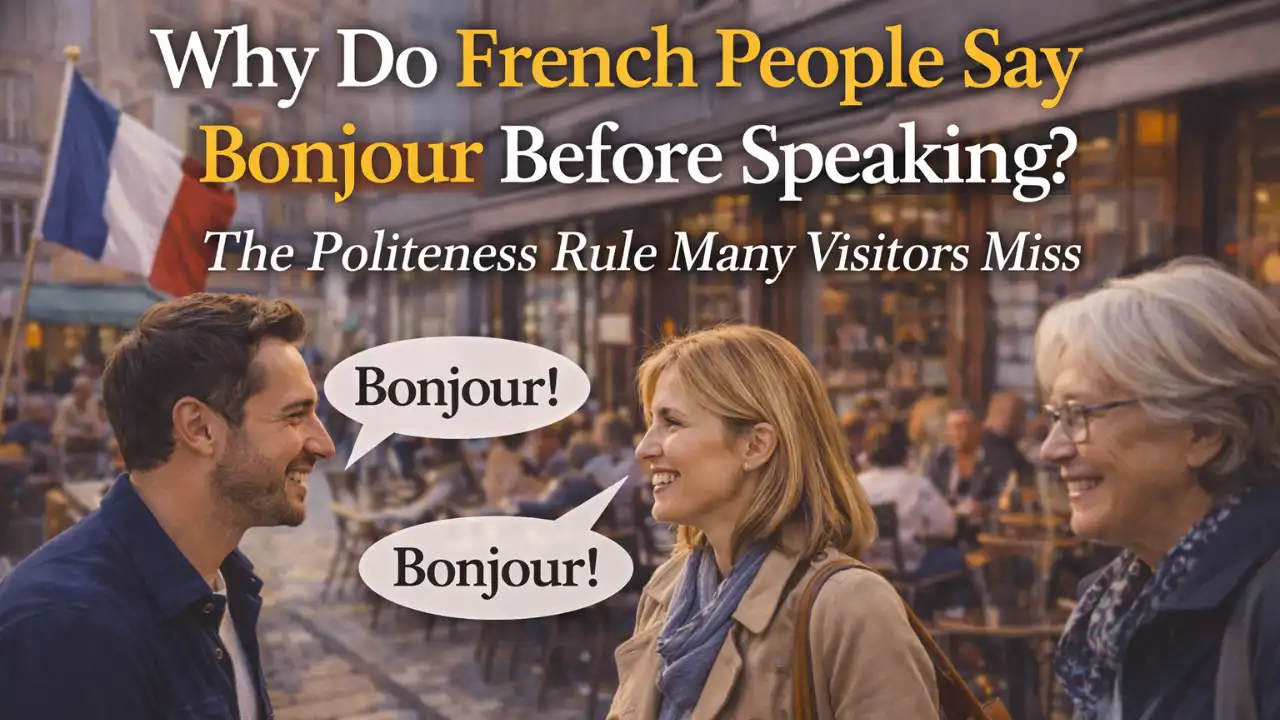
You walk into a small bakery in France, smile at the person behind the counter, and immediately ask for a croissant. Instead of receiving a friendly response, the atmosphere suddenly feels slightly awkward. Nothing dramatic happens, yet something feels off. What many visitors do not realize in moments like this is that they skipped one of the most important social rules in France. Understanding why French people say bonjour before speaking reveals a cultural habit that goes far beyond simple politeness.

In France, greeting someone properly is not optional. It is an essential part of social interaction that signals respect, recognition, and basic courtesy. Whether entering a shop, asking for directions, or speaking to someone for the first time that day, saying bonjour is considered the natural starting point of any conversation.
Once you understand the cultural meaning behind this habit, everyday interactions in France begin to make much more sense.
The Meaning Of Bonjour In French Culture
The word bonjour literally translates to “good day,” yet its cultural meaning extends far beyond a simple greeting. In French society, the word functions as a social key that opens the door to conversation.
Before discussing business, asking a question, or requesting assistance, people acknowledge each other with a greeting. This small act signals that the other person has been recognized and respected.
Without this greeting, the interaction can feel abrupt or impersonal. From a cultural perspective, skipping bonjour may seem as though someone is focusing only on their request rather than acknowledging the person they are speaking to.
Because of this expectation, the greeting becomes a natural part of daily life.
Why Greeting People Is So Important In France
French culture places strong emphasis on recognizing social relationships. Saying bonjour demonstrates awareness that you are interacting with another person rather than simply conducting a transaction.
This habit reflects a broader cultural value: respect begins with acknowledgment. By greeting someone first, you establish a polite and friendly atmosphere before the conversation continues.
The custom also helps maintain social harmony in public spaces. Shops, cafés, offices, and even elevators become environments where people acknowledge each other briefly before going about their activities.
Over time, this tradition becomes so natural that most French people say bonjour almost automatically when entering a room or beginning a conversation.
Situations Where Saying Bonjour Is Expected
One reason this cultural rule surprises visitors is that it applies to many everyday situations.
For example, when entering a small shop, customers usually greet the shopkeeper with bonjour before browsing or asking for help. In a bakery, café, or market stall, the greeting almost always comes before ordering.
The same rule often applies in elevators, waiting rooms, or small offices where people share a limited space. Greeting others briefly helps create a respectful social environment.
Even when asking a stranger for directions, beginning with bonjour signals politeness and increases the likelihood of receiving a helpful response.
What Happens If You Skip Bonjour
Visitors sometimes skip the greeting simply because they are not familiar with the custom. However, the absence of bonjour can subtly affect how the interaction unfolds.
Instead of appearing friendly and respectful, the request may seem abrupt. Shopkeepers or service staff might respond more formally or appear less enthusiastic.
This reaction is rarely intended to be unfriendly. Rather, it reflects a cultural expectation that greetings should come before requests.
Once visitors understand this rule and begin using bonjour naturally, interactions often become noticeably warmer.
Bonjour As A Sign Of Respect
Another reason the greeting is so important involves the concept of respect in French social behavior.
Acknowledging someone before speaking shows that you recognize their presence and value the interaction. This small gesture creates a more balanced exchange between two people.
For example, when entering a bakery and saying bonjour, you acknowledge the person behind the counter before asking for something. This brief moment establishes a polite connection.
Because respect plays such an important role in French culture, greetings help reinforce positive social relationships.
The Difference Between Bonjour And Bonsoir
While bonjour is the most common greeting during the day, French culture also distinguishes between greetings depending on the time.
During the evening, people often switch to bonsoir, which translates to “good evening.” The transition typically occurs later in the day, especially when entering restaurants, shops, or social gatherings after sunset.
Using the appropriate greeting demonstrates cultural awareness and attentiveness to social norms.
Although the difference may seem small, these details contribute to the overall rhythm of polite interaction in French society.
Greeting Rules In Shops And Restaurants
Now that you understand the importance of greetings, it becomes easier to see why they matter so much in places such as shops, cafés, and restaurants.
In small businesses, greeting the shopkeeper upon entering is almost automatic. Even if customers are simply browsing, they often say bonjour as soon as they walk through the door.
Similarly, when leaving a shop, it is common to say au revoir as a polite farewell.
These small gestures help maintain a respectful and friendly atmosphere within public spaces.
Bonjour In Professional And Social Settings
The greeting rule is not limited to shops or casual encounters. It also appears in professional and social environments.
Colleagues often greet each other with bonjour when arriving at work in the morning. In meetings or offices, acknowledging others before beginning discussions is considered courteous.
At social gatherings, greeting people individually when entering a room is also common. These greetings help establish friendly interactions before conversations begin.
Why Visitors Often Find This Rule Surprising
Many visitors are surprised by the importance of greetings because customs differ across cultures. In some countries, people may immediately begin speaking or asking questions without first acknowledging the person they are addressing.
In France, however, skipping the greeting disrupts the expected rhythm of conversation.
Once visitors understand this cultural difference, adapting to the habit usually becomes easy. Saying bonjour before speaking soon feels natural and often improves the quality of interactions.
How Saying Bonjour Improves Social Interactions
Using bonjour appropriately can dramatically change how conversations begin in France.
When people hear the greeting, they immediately recognize that the speaker understands basic cultural etiquette. This recognition often leads to friendlier responses and smoother communication.
Even a brief greeting can create a positive atmosphere where both people feel comfortable continuing the conversation.
For language learners, mastering this simple habit is one of the easiest ways to sound more natural when speaking French.
The Cultural Philosophy Behind The Greeting
Looking deeper, the importance of bonjour reflects a broader cultural philosophy.
French society often values thoughtful interaction, politeness, and mutual respect. Small gestures such as greetings demonstrate awareness of others and appreciation for social harmony.
This philosophy also appears in other traditions. Long meals encourage conversation, café culture encourages observation and discussion, and greetings reinforce respectful communication.
Each of these habits contributes to a culture where human interaction remains central to everyday life.
Frequently Asked Questions About Saying Bonjour In France
Why do French people always say bonjour?
Saying bonjour is a cultural sign of politeness and respect. It acknowledges the other person before beginning a conversation or making a request.
Is it rude not to say bonjour in France?
In many situations it can seem impolite because the greeting is considered the normal starting point of interaction.
When should you say bonjour in France?
People typically say bonjour when entering shops, greeting coworkers, meeting acquaintances, or asking someone for help.
What greeting is used in the evening?
During the evening people often use bonsoir, which means “good evening.”
Do you say bonjour to strangers?
Yes. Greeting strangers politely before asking a question is common and appreciated.
Do you say bonjour more than once per day?
Usually people say bonjour the first time they see someone that day. After that, other greetings or simple conversation may follow.
The Small Word That Explains A Big Cultural Rule
Although it is only one word, bonjour represents an important social habit in France. The greeting reflects a cultural tradition where respect, acknowledgment, and politeness form the foundation of everyday interactions.
By simply greeting someone before speaking, people create a friendly and respectful atmosphere that makes communication smoother and more enjoyable.
For visitors and language learners, understanding this tradition can transform everyday experiences in France. Once the habit becomes natural, conversations begin more easily and interactions feel far more authentic.
In many ways, this small word captures an essential truth about French culture: meaningful interactions often begin with a simple gesture of respect.